Epoch AI
Epoch AI tracks the trajectory of artificial intelligence through research, datasets, and interactive tools. Over two years as its sole designer, I helped make that work easier to discover and understand while developing systems that supported a growing volume and increasing pace of output. Working with researchers, engineers, and leadership, I helped shape internal and external projects from early questions through prototypes, testing, implementation, and launch.
Connecting a growing body of research
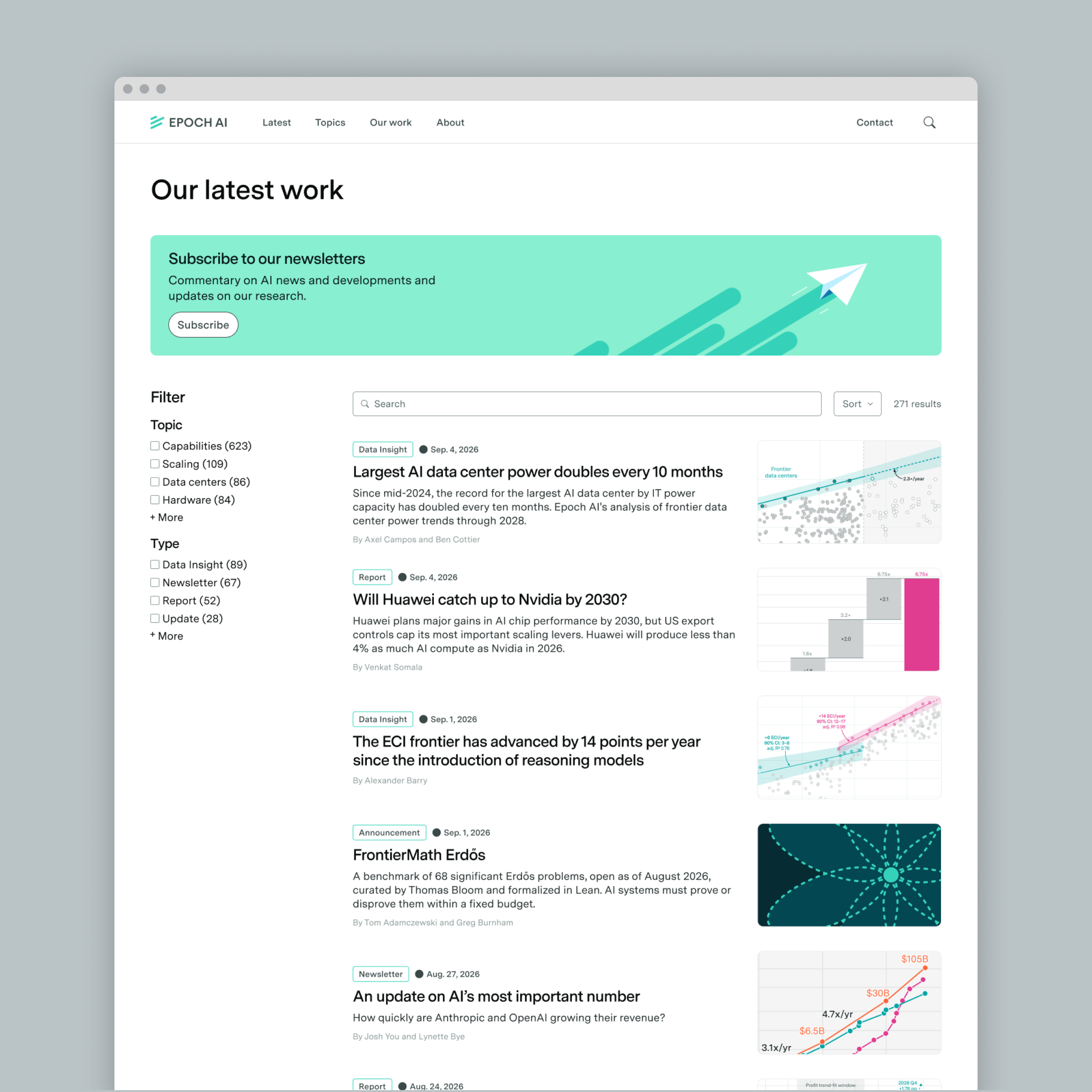
As Epoch’s research expanded, the website’s original structure no longer reflected the range of work the organization was producing. New outputs often had to be forced into existing page types or supported through one-off solutions, making the site harder to navigate and increasingly difficult to maintain.
Drawing on interviews with users and internal stakeholders to understand how people looked for, interpreted, and moved between Epoch’s research, I led the redesign of the site architecture and worked with an external agency on its visual direction, connecting clearer navigation and content organization with a more coherent foundation for design and development.

Exploring the impact of AI data centers
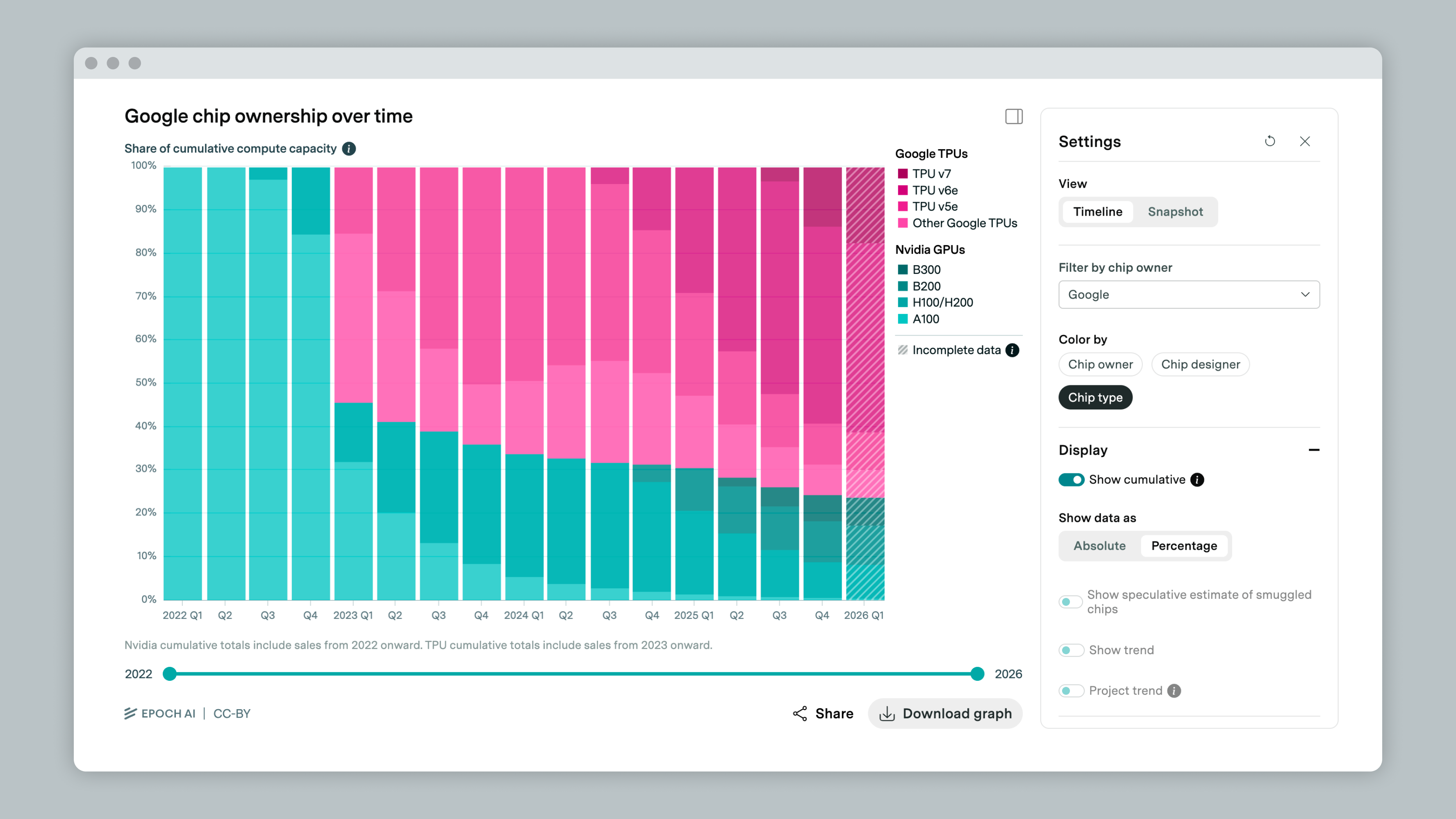
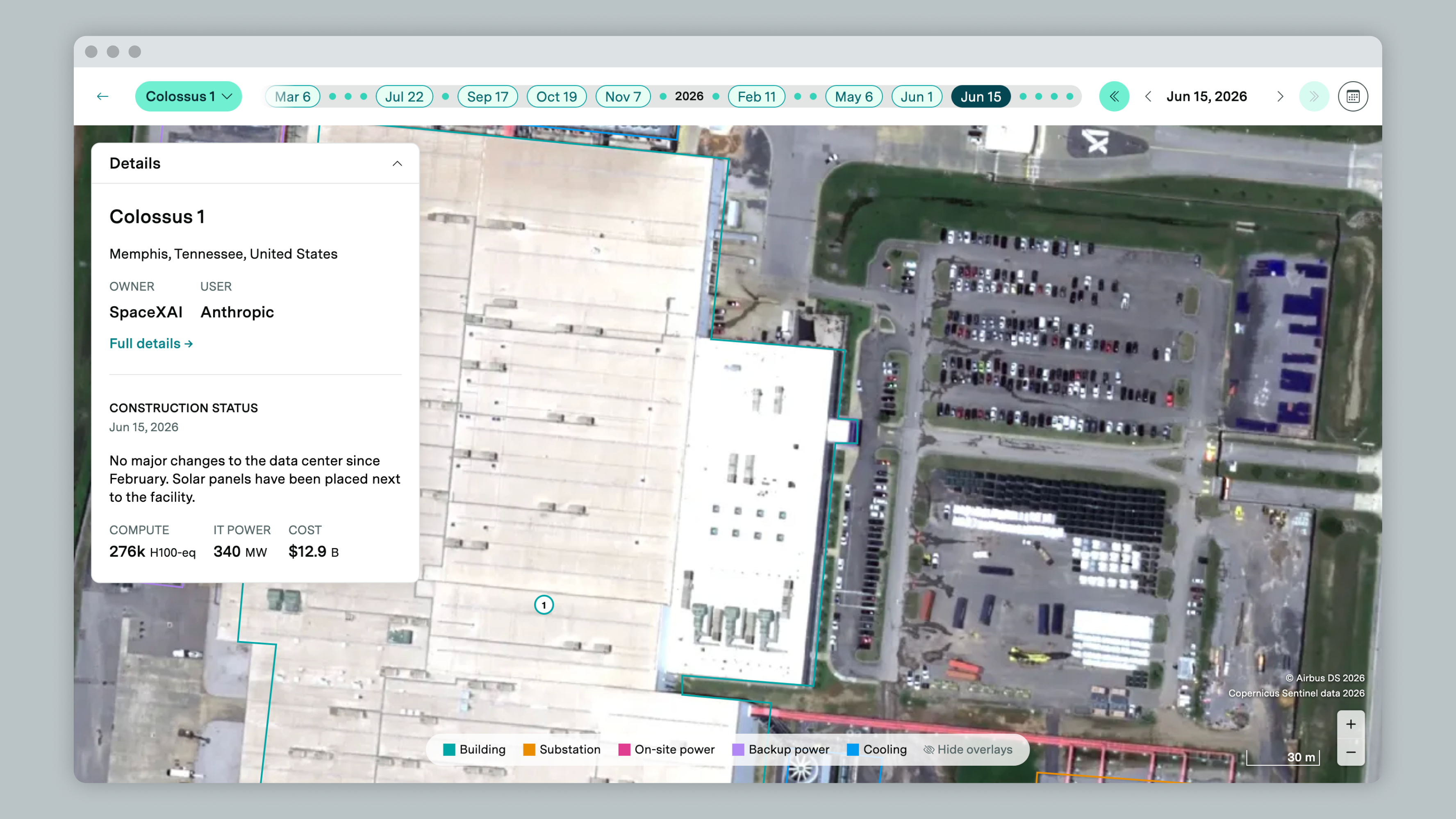
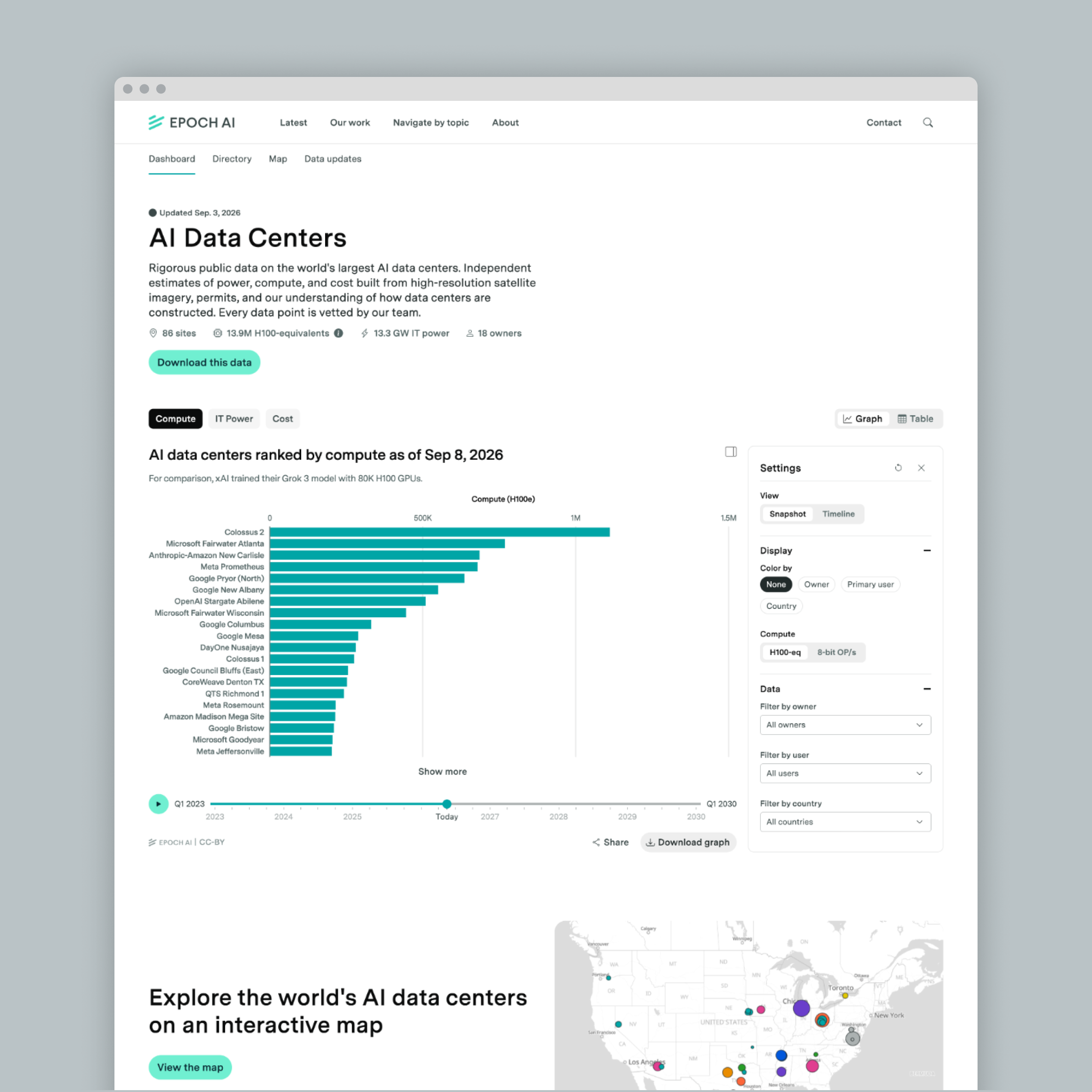
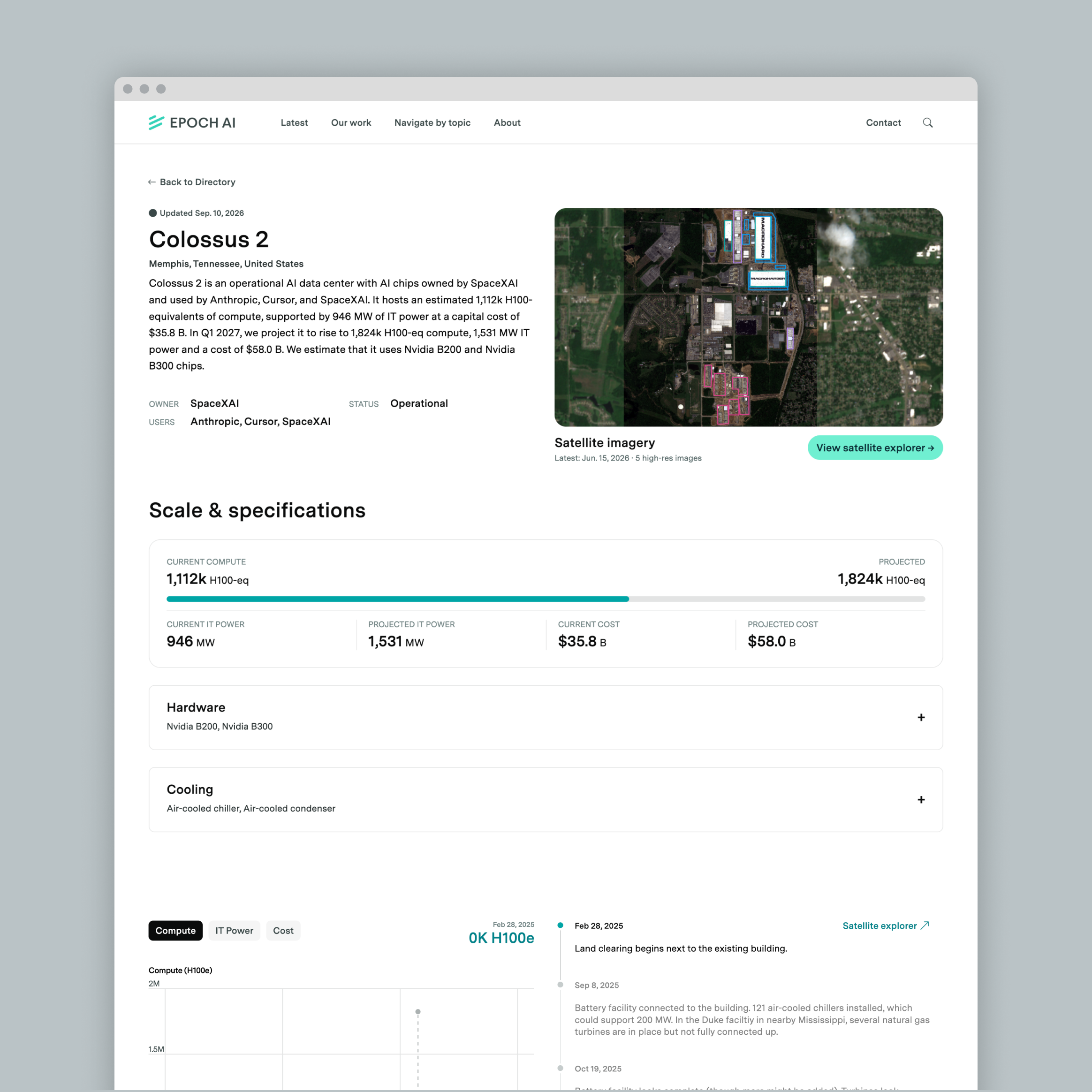
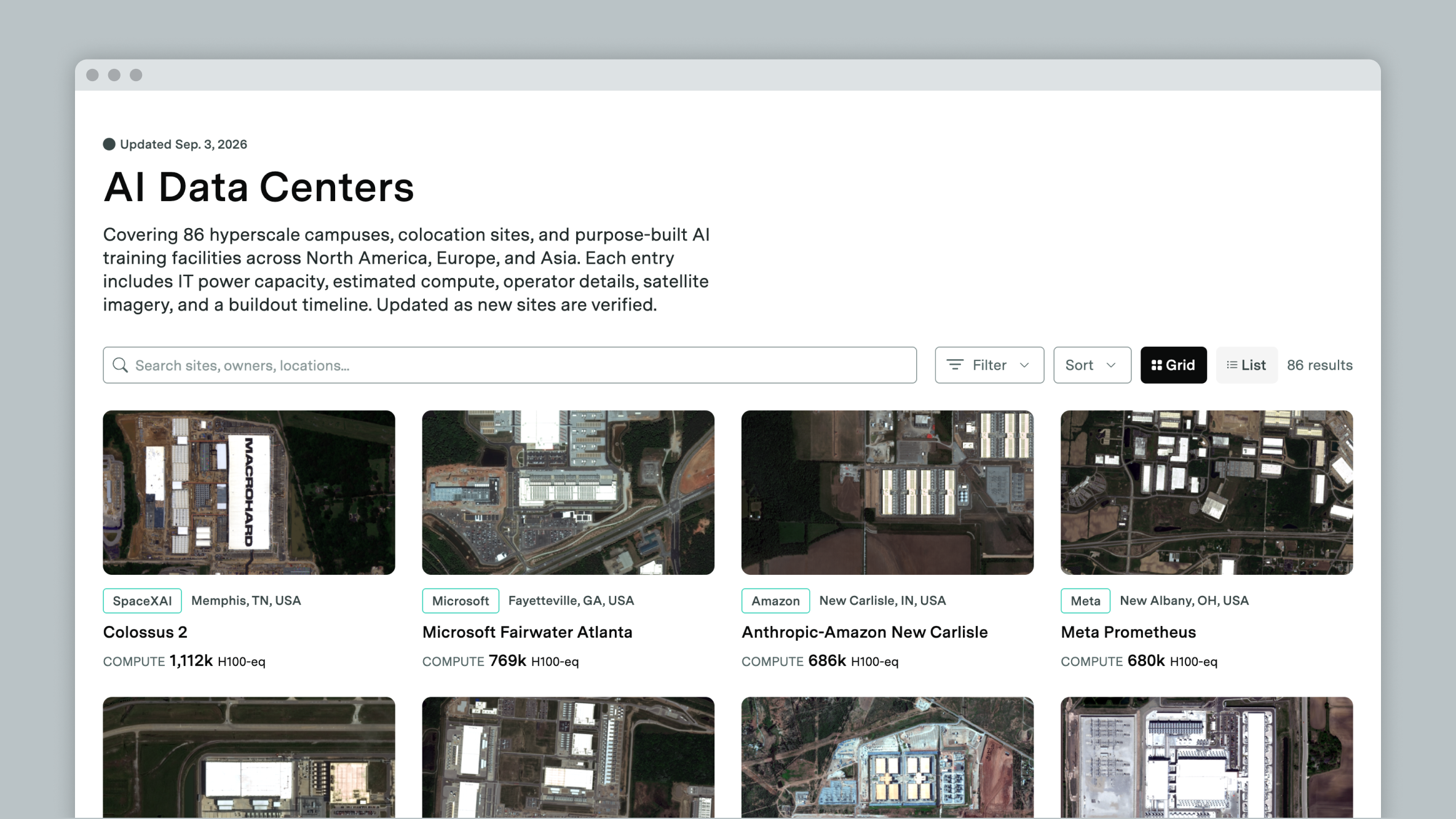
Epoch’s data-center research combines satellite imagery, construction records, and estimates of computing capacity. I helped turn that evidence into a public experience, working from early concepts through prototyping, user testing, implementation, and QA. I worked with researchers to understand the questions the product should help people answer, using prototypes to make ideas concrete and test design directions.
Building a visual language for research
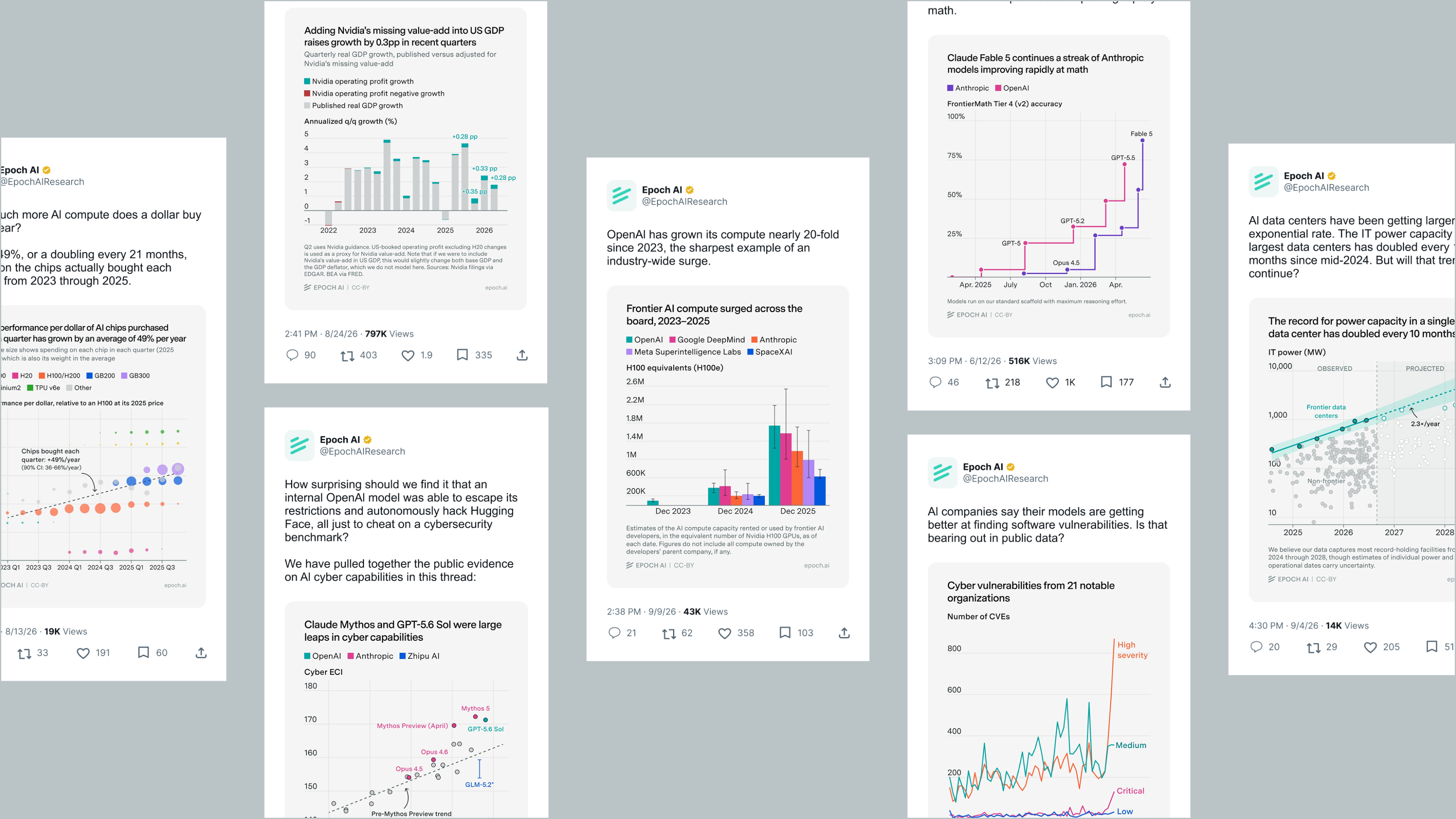
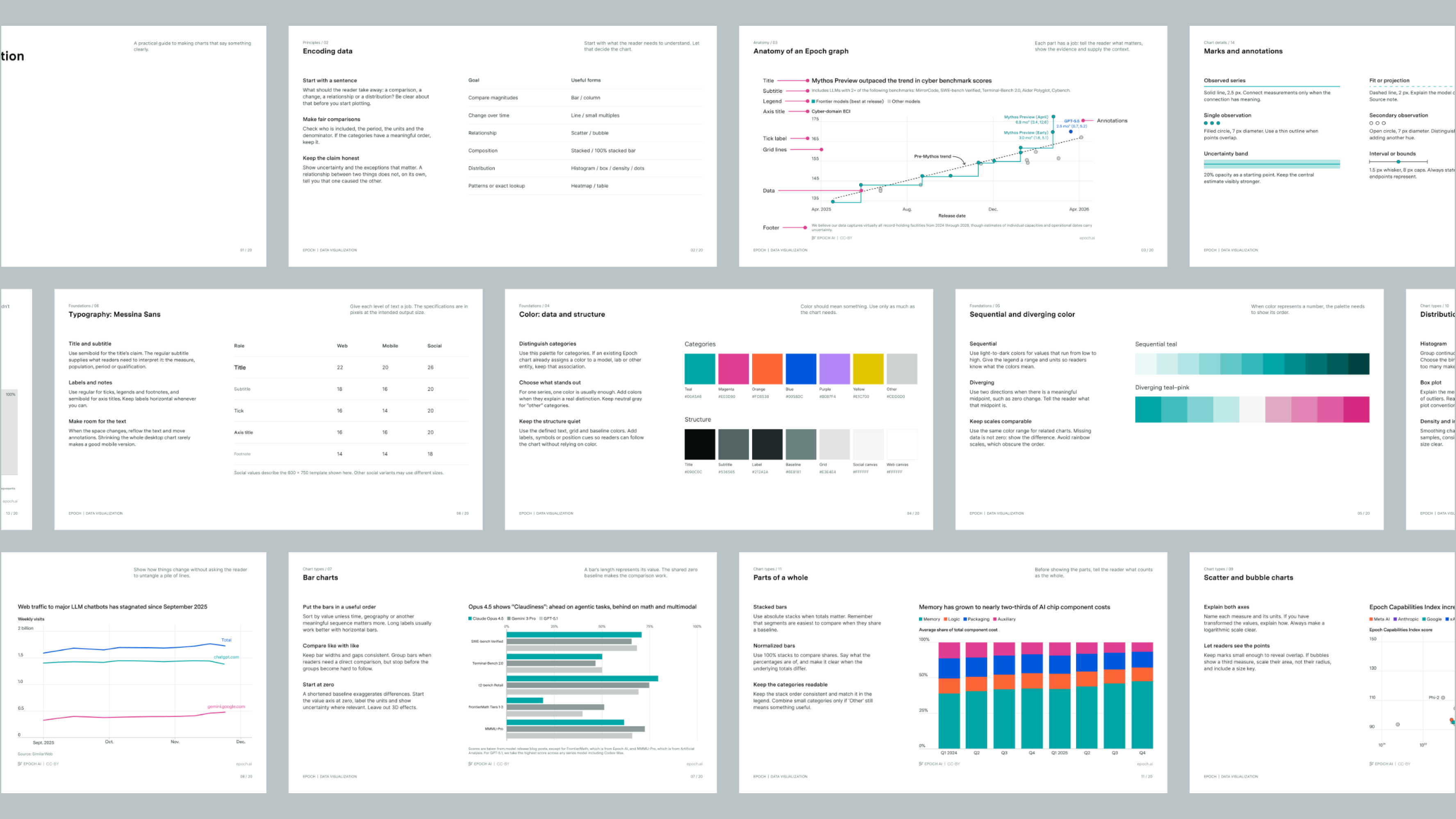
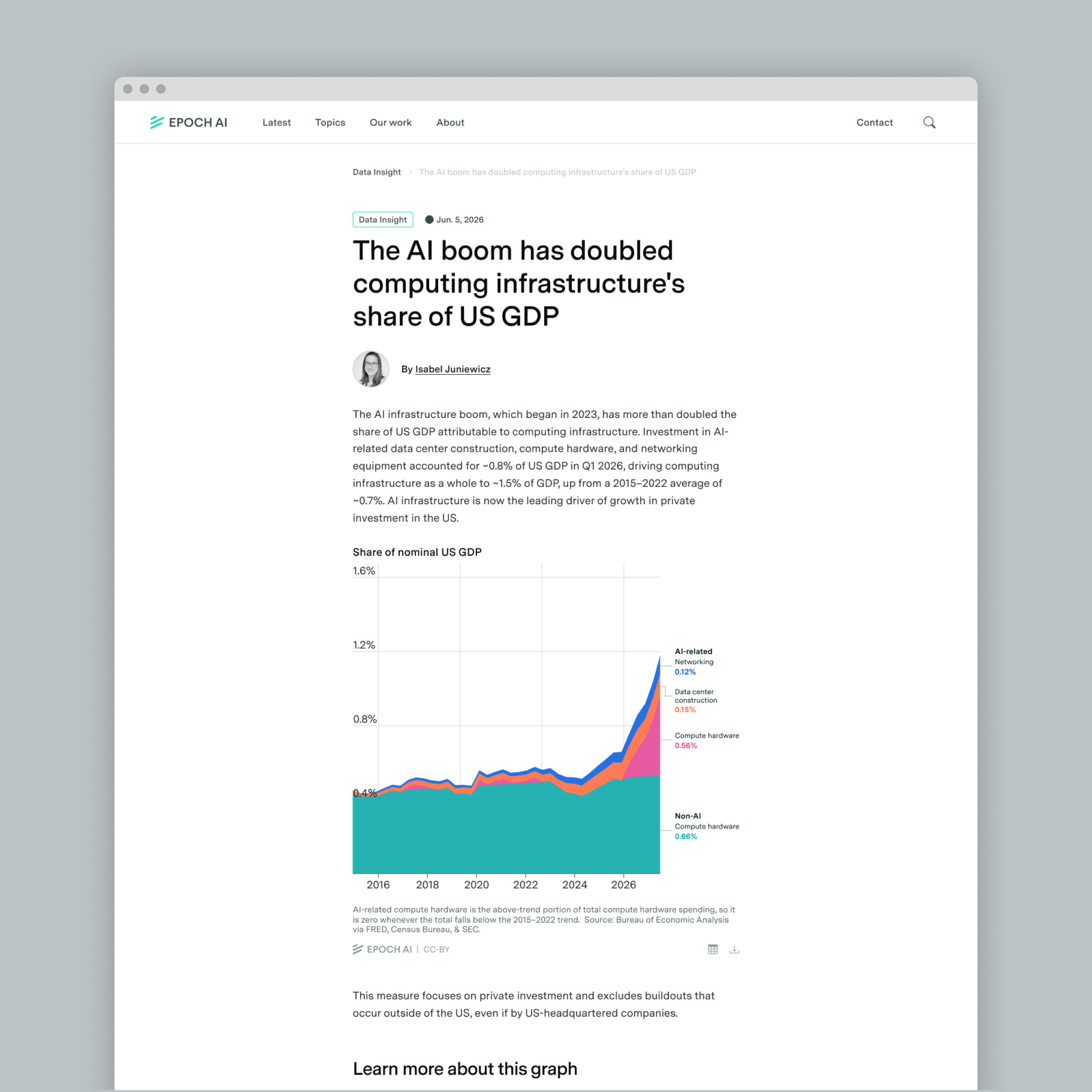
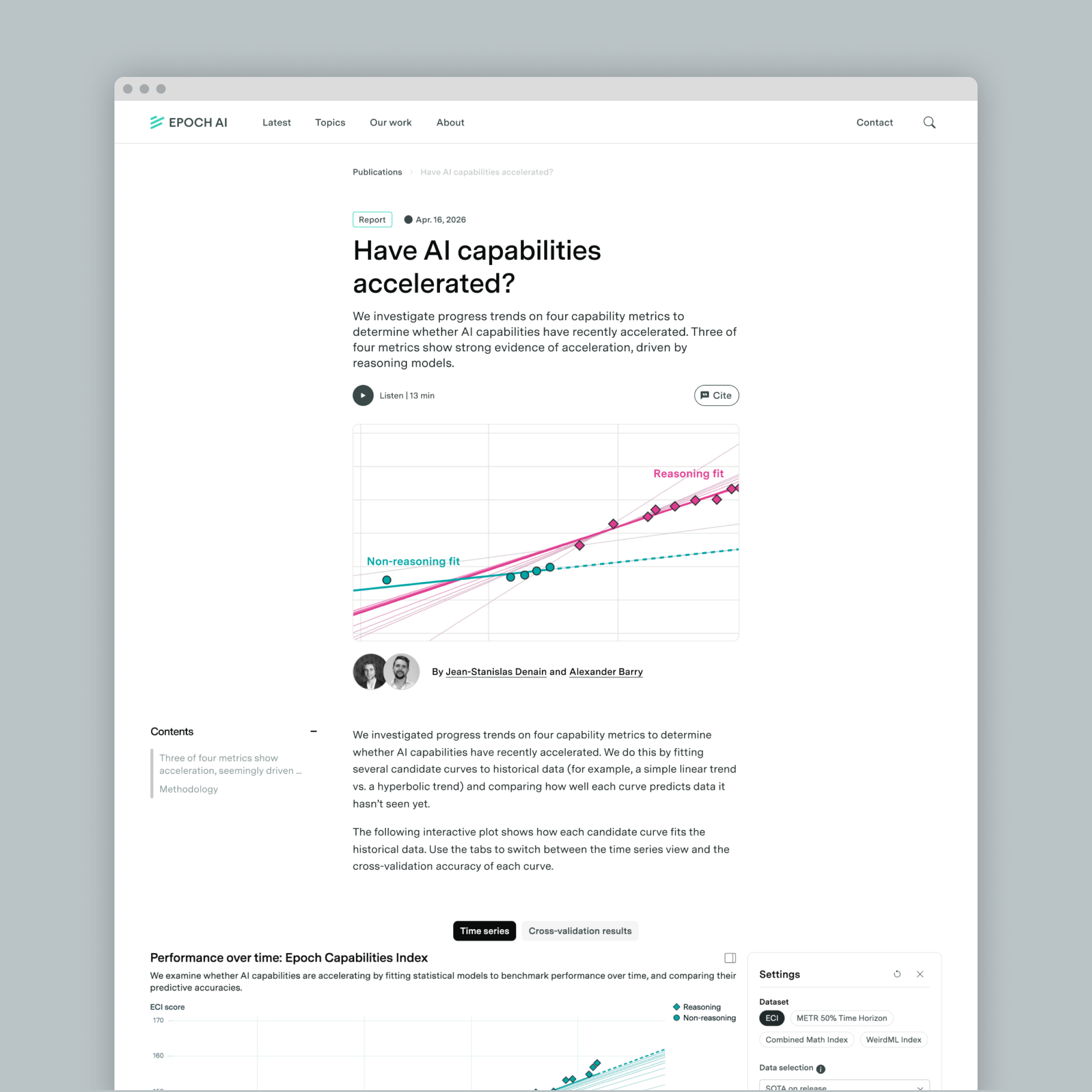
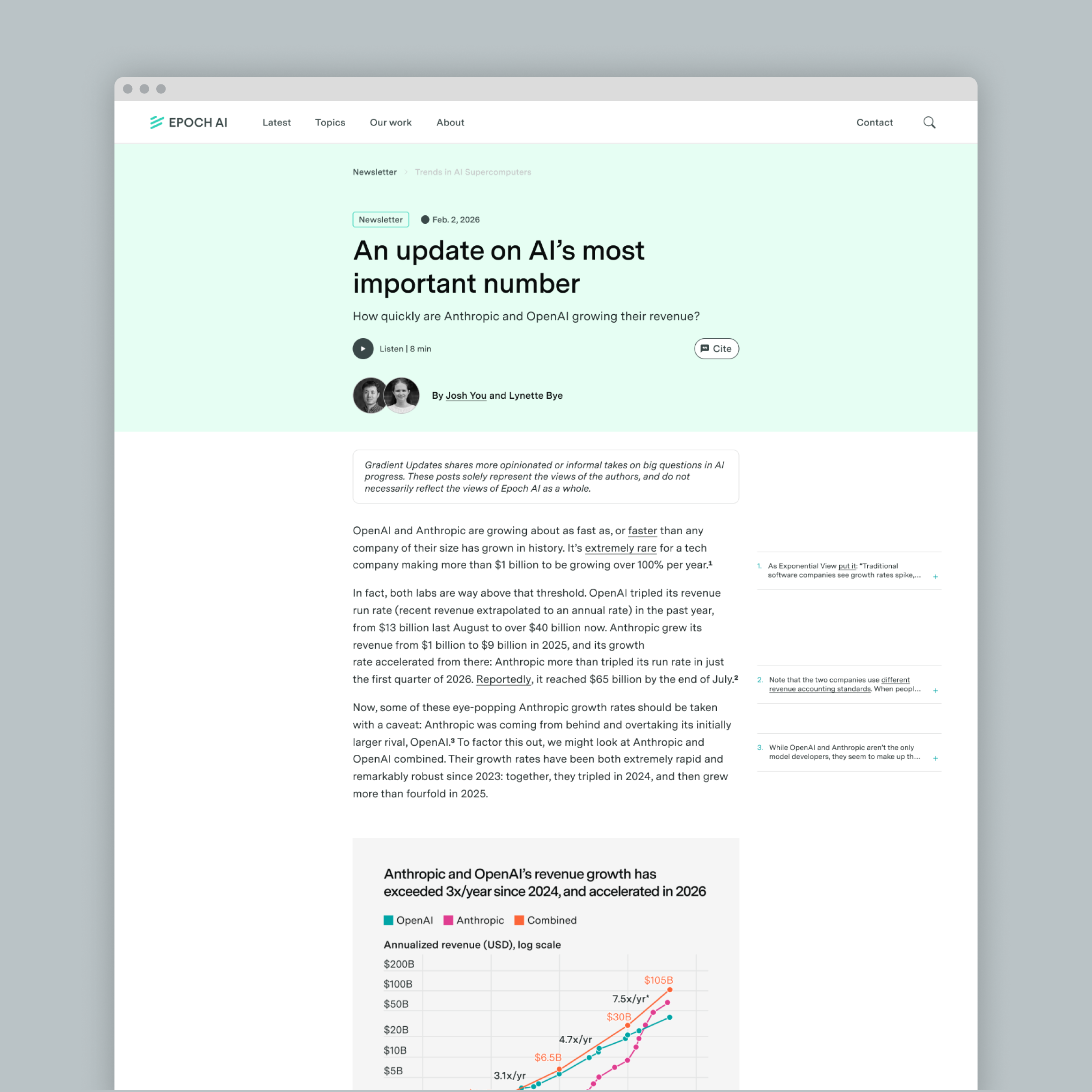
I led data visualization and information design at Epoch AI, turning complex quantitative findings into clear, legible, and compelling visual explanations. My role ranged from shaping individual charts and graphics — deciding what to emphasize, how to structure comparisons, and how to communicate uncertainty — to building the visual language and reusable patterns that made Epoch’s research recognizable across projects.
As the organization’s research output grew, I focused on making high-quality communication systematic rather than bespoke. I developed shared conventions, reusable approaches, and workflows that helped researchers communicate complex ideas more consistently while still leaving room for the particular demands of each piece of research. The goal was both editorial and operational: make difficult findings easier to understand, and make that standard of communication easier for the organization to sustain at scale.